CIRCULAR CARIBBEAN PROJECT

On December 31, 2024, the project “Prevention of plastic waste to reduce its impact on the Caribbean Sea of Guatemala, through innovative methods, with the participation of the academic sector, private sector and community” was successfully completed, within the framework of the regional circular Caribbean project, which began in January 2022.

It was financed by the German Society for International Cooperation (GIZ), for an amount of €123,802.10, equivalent to Q 1,015,177.22, which was administratively coordinated by the General Secretariat of the Central American Higher University Council (CSUCA) and executed by the Caribbean Research Institute, of the University Center of Izabal, of the University of San Carlos of Guatemala

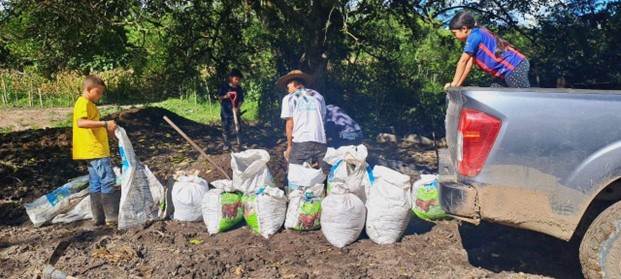
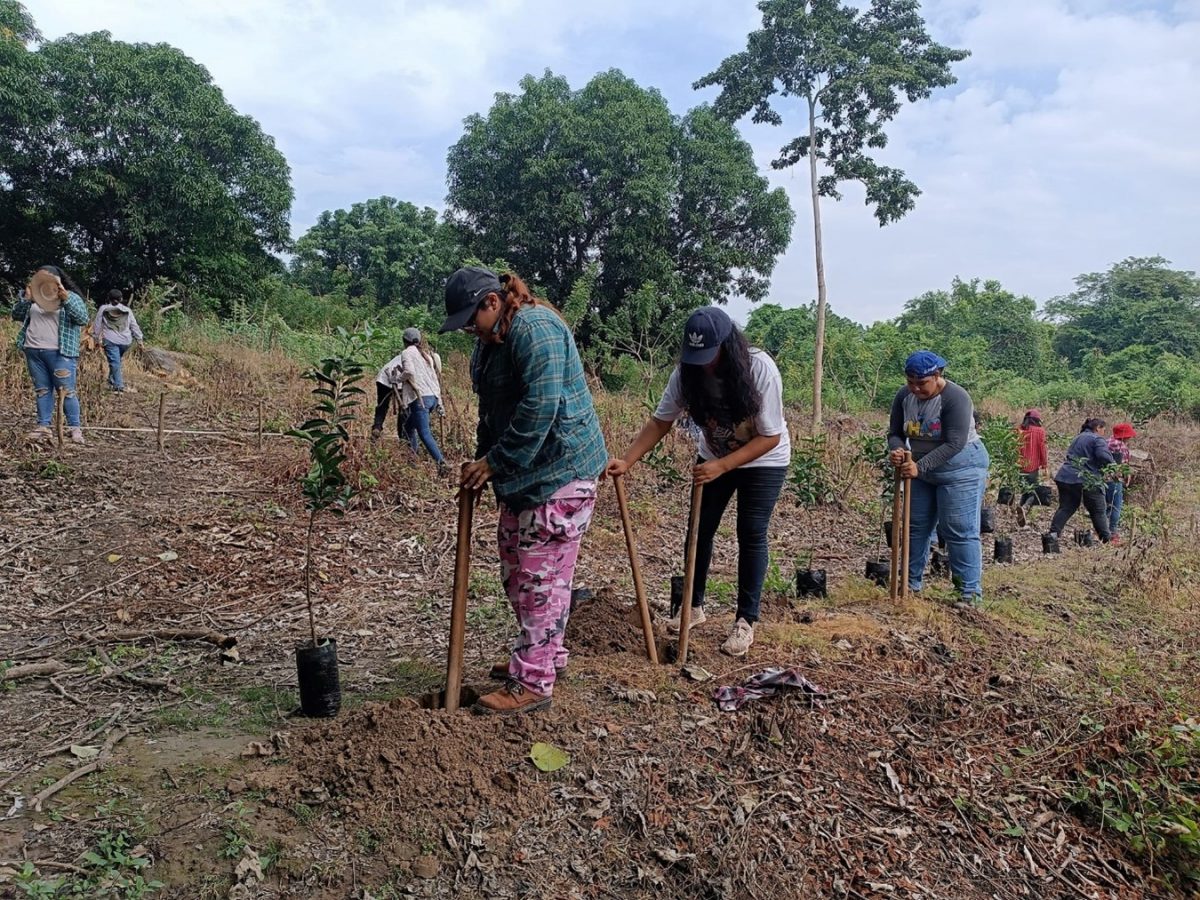
The project was implemented at the mouth of the Motagua River, with the participation of residents from the communities of El Quetzalito, Las Vegas, and Medialuna. They carried out clean-up and collection activities to process the waste collected by the Ministry of Environment and Natural Resources' (MARN) bio-barrier, which operates a plastic collection and separation system in the area. These activities have allowed the region to unite the efforts of various organizations, such as MARN, the Municipality of Puerto Barrios, and other institutions, to prevent plastic waste from entering the Caribbean Sea.

Some of the project's key results include:

More than 800 people participated in the environmental education program across more than 10 courses. 8.61 tons of plastic were collected, compacted, and recycled in the production of eco-asphalt. A manual for incorporating plastic waste into asphalt was developed. A mobile processing system was created for educational and awareness-raising purposes. A feasibility study was conducted for the clothing and textile sector in Puerto Barrios, Izabal. A guide to home composting was published. A baseline study of the municipality of Puerto Barrios was established using the Waste Flow Diagram tool.

A strengthened multi-year strategic plan, monitoring, and communication strategy for the Motagua River Basin Alliance. Five plastic processing plants receiving technical assistance. A diploma program in Integrated Solid Waste Management.

Five schools trained and equipped for the prevention and management of recyclable waste. A roadmap for a housing prototype using difficult-to-recycle materials.

Support for local campaigns of Reciclemos.gt and Think responsibly, avoid disposable items

Two environmental management policy guides for Small and Medium Enterprises (SMEs), food sector and diverse manufacturing.

CSUCA-IDRC regional project follow-up workshop

On November 21 and 22, the University of Costa Rica hosted the first in-person follow-up workshop for the regional project “Strengthening Inclusive Science and Innovation Systems in Latin America through a Collaborative Research Network.” This project is implemented through the Central American Higher University Council (CSUCA) with financial support from the International Development Research Centre (IDRC). The workshop brought together the coordinators of the collaborative research projects, as well as representatives from the CSUCA-IDRC Project Steering Committee and Advisory and Liaison Committee.

The workshop was held to ensure effective follow-up and monitoring of the implementation of 16 scientific collaboration projects, providing a space to promote the exchange of ideas and experiences among collaborative research projects. It also aimed to identify the strengths and challenges of scientific collaboration networks or consortia in order to ensure the sustainability of project results after completion and to contribute to evidence-based policy decision-making.

This space fostered collective construction among the workshop participants, generating recommendations to boost scientific exchange and collaboration, as well as inclusive innovation with gender equity in the Central American region.

It is worth noting that the CSUCA-IDRC project is currently implementing 16 projects within the first call for proposals, which are being developed in four priority areas:

  • Territory, risk management and local development.
  • Economic growth, productivity, competitiveness and sustainable development.
  • Digital transformation, automation, artificial intelligence.
  • Data science, climate change, and environmental management.

Areas established in the “Research, Science, Technology and Innovation” program of the Fifth Plan for the Regional Integration of Higher Education of Central America and the Dominican Republic -PIRESC V-.

Equipo de investigación presenta avances de proyecto en congresos académicos de Guatemala y Honduras

Durante el mes de octubre se realizaron congresos académicos en Guatemala y Honduras, con énfasis en innovación.

La Facultad de Ciencia y Tecnología del Campus Central de la Universidad Pedagógica Nacional Francisco Morazán (UPNFM) celebró por quinto año consecutivo el Congreso FACYT, del miércoles 9 al viernes 11 de octubre de 2024 en modalidad híbrida. Este evento tuvo como lema “Innovación en la Educación en Ciencia y Tecnología”, y llevó a cabo diversas actividades, tales como la divulgación de investigaciones, la presentación de tesis por parte de docentes, talleres, y prácticas experimentales innovadoras.

En el caso del Centro Universitario de Occidente (CUNOC), el evento organizado por la Asociación de Estudiantes de Ingeniería de Occidente organizó el Congreso Innovación y Tecnología 2024, durante la semana del 14 al 18 de octubre, en conmemoración de los 25 años de la División de Ciencias de la Ingeniería de dicho centro universitario.

En ambos eventos, participaron investigadores e investigadoras del subproyecto “Hacia una gestión SMART y Sostenible del agua en comunidades de Centroamérica, a través de investigación y educación innovadora e inclusiva (Gestión SMART-S del Agua)” para difundir los avances en el desarrollo de esta actividad académica, con el objetivo de promover y visibilizar los resultados a nivel institucional.

El proyecto Gestión SMART-S del Agua forma parte del proyecto regional “Fortaleciendo sistemas inclusivos de ciencia e innovación en América Latina a través de una red de investigación colaborativa”, el cual es impulsado por el Consejo Superior Universitario Centroamericano (CSUCA), la Comisión para el Desarrollo Científico y Tecnológico de Centroamérica y Panamá (CTCAP) y la Secretaría General del Sistema de Integración Centroamericana (SG-SICA), con financiamiento del Centro Internacional de Investigaciones para el Desarrollo de Canadá (IDRC, por sus siglas en inglés).