57th General Assembly of the CENTRAL AMERICAN AND CARIBBEAN REGIONAL RESEARCH AND POSTGRADUATE SYSTEM (SIRCIP) of the CSUCA

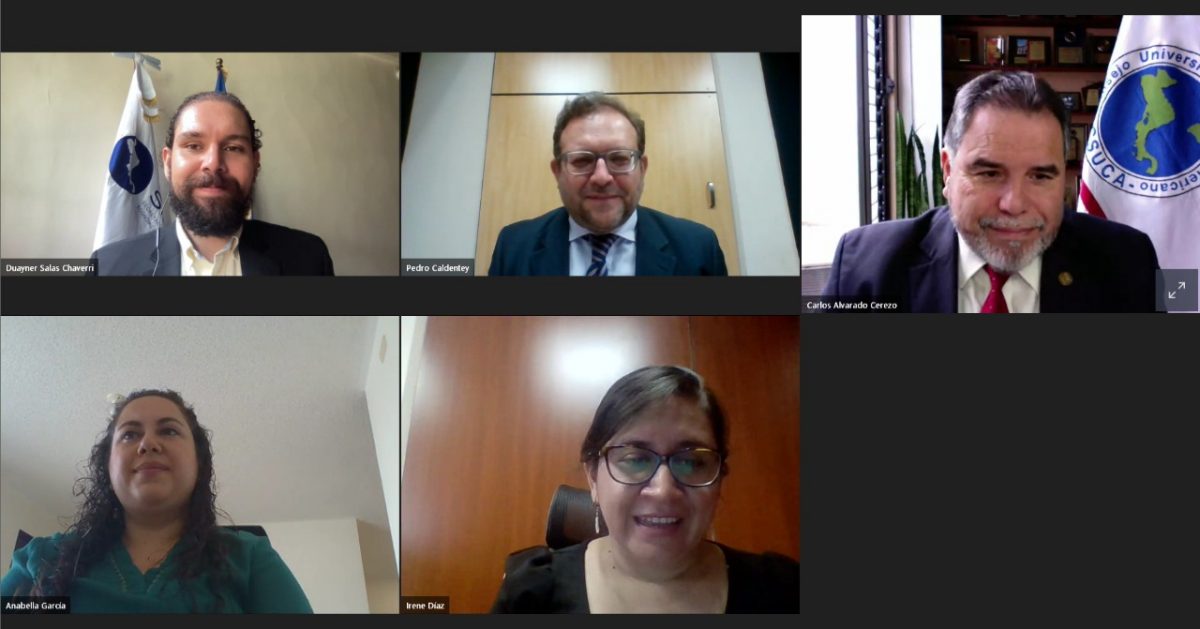
Como parte de las acciones vinculadas al desarrollo de la investigación y programas de postgrado en la región centroamericana y el Caribe, se realiza 57 Asamblea General de SIRCIP.

La jornada inició con la presencia de la Sra. Ramona Rodríguez, Presidenta de CSUCA, quien expresó “Estamos todos convencidos que en la medida en que fortalezcamos la investigación y postgrado vamos a involucrarnos en el desarrollo de nuestras sociedades”.

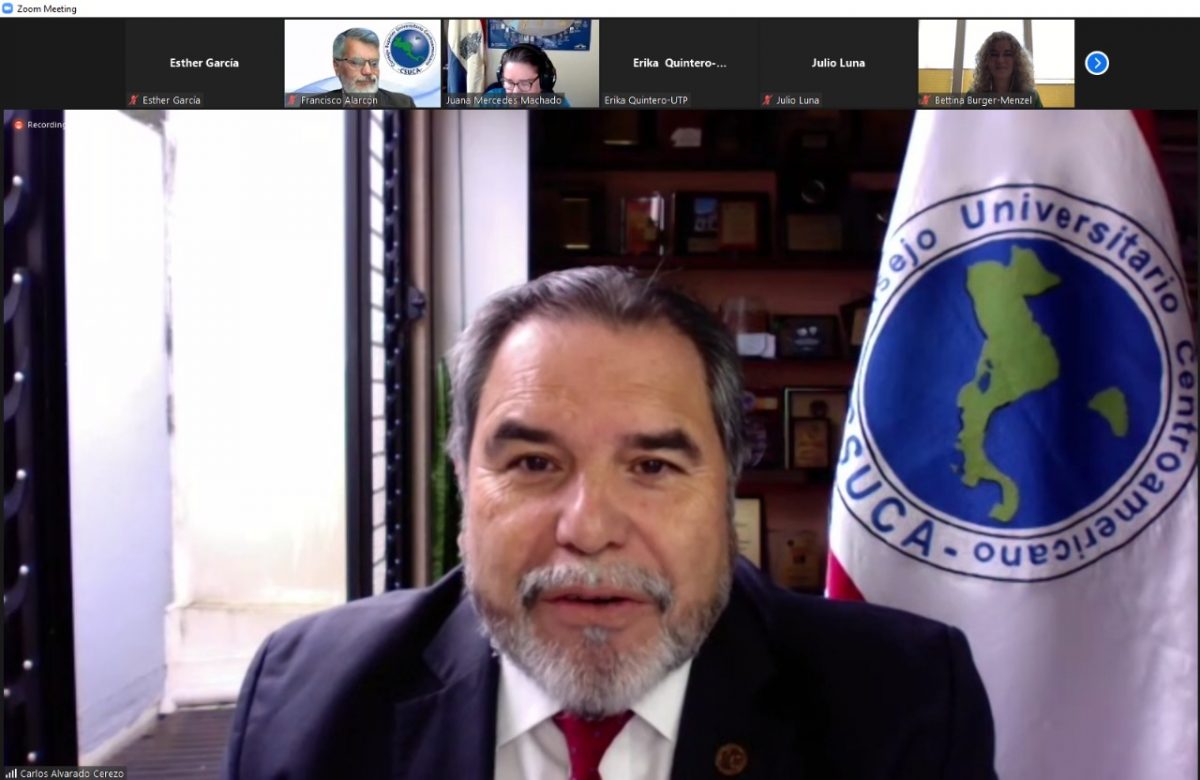
Mientras que el Sr. Carlos Alvarado, Secretario General de CSUCA señaló “El PIRESC V es un tanque de pensamiento que generó una dinámica, legitimando y dando certeza al pensamiento de la comunidad universitaria, marcando la hoja de ruta de la educación superior para los próximos años”.

A la vez la Sra. Dayra Blandón, Presidenta de SIRCIP, hizo una reflexión sobre la “Transformación de modelos educativos, rediseño de procesos académicos y administrativos, desde las universidades públicas de la región trabajamos de manera colaborativa, para fortalecer a las instituciones de educación superior”.

Dentro de las acciones que se desarrollaron en la 57 Asamblea, se puede destacar la conferencia virtual “La Ciencia Abierta: ¿Qué es, porqué es tan importante para nuestra región y cuáles podrían ser los principales pasos para alcanzarla?” presentación realizada por la Sra. Bianca Amaro, Presidenta de LA Referencia.

Presentación y aprobación de la Guía de Evaluación para otorgar el reconocimiento de la Categoría Regional Centroamericana. Comisión Técnica del SIRCIP.

Exposición del Repositorio Centroamericano del SIIDCA-CSUCA y la Plataforma Sistema Integral de Seguimiento a la Investigación -SISIC- como base para el Observatorio del SIRCIP-CSUCA, resultado de la la Comisión Técnica del SIRCIP.

Al finalizar la 57 Asamblea General de SIRCIP, se determinó celebrar el 6to. Encuentro de BIENAL, en Nicaragua, siendo la universidad anfitriona, la UNAN-Managua en el año 2023 y la 58 Asamblea General de SIRCIP, el 27 de octubre de 2022.

Learning Innovation and Qualifications Frameworks for Higher Education

Central America, April 26, 2022

With the purpose of presenting the experience of the Qualifications Framework for Central American Higher Education -MCESCA- and that of the National Qualifications Frameworks of Costa Rica, with a perspective oriented towards learning innovation and regional academic harmonization, the virtual conference “Learning Innovation and Qualifications Frameworks for Higher Education” was held today.

To begin the activity, the Secretary General of CSUCA, Carlos Alvarado, stated, “In the current situation, higher education must anticipate and prepare to fulfill its role with societies, a situation that invites us to break with traditional education models through innovative activities for our educational systems.”.

Speaking on behalf of the German Rectors' Conference HRK, Iris Danowski said, "A qualifications framework offers a whole range of possibilities and perspectives; one of the most important aspects is that this tool should be the starting point for reflecting on the current situation.".

For her part, Juana Machado, academic vice-rector of UNAN-León and president of SICEVAES, stated, “It is important to strengthen continuous improvement in our educational institutions to face the challenges of scientific and technological advances presented by higher education.”.

The virtual conference featured the participation of Francisco Alarcón, deputy secretary general and academic director of CSUCA, as a speaker for MCESCA, and Katalina Perera, representative of OPES-CONARE, who presented Costa Rica's experience with National Qualifications Frameworks.

To view the virtual conference, you can access Facebook through the following link: https://fb.watch/cDRql87uTW/ To download the Central American Higher Education Qualifications Framework (MCESCA), you can access the following link: https://csuca.org/es/download/marco-de-cualificaciones-para-la-educacion-hica/.

The activity was carried out within the framework of the actions of SICEVAES, a system that promotes innovation and improvement of higher education by the member universities of CSUCA.


First Regional Meeting on Innovation, Entrepreneurship and Knowledge Transfer

Central America, April 20, 2022

The “First Regional Meeting on Innovation, Entrepreneurship and Knowledge Transfer” has begun with three days of academic sessions. It is organized by the General Directorate of Research of the University of San Carlos of Guatemala -USAC-, with the support of the Central American Higher University Council -CSUCA- and the member universities: University of El Salvador -UES-, National Autonomous University of Honduras -UNAH-, National Autonomous University of Nicaragua, Managua -UNAN Managua-, University of the Autonomous Regions of the Nicaraguan Caribbean Coast -URACCAN-, University of Costa Rica -UCR-, National University of Costa Rica -UNA-, University of Panama -UP-, Technological University of Panama -UTP-, Specialized University of the Americas -UDELAS- and International Maritime University of Panama -UMIP-.

The event began with welcoming remarks from the Director General of Research at USAC, Mr. Hugo Pérez Noriega: “In commemoration of World Entrepreneurship Day, World Intellectual Property Day, and World Creativity and Innovation Day, we are celebrating the First Regional Meeting on Innovation, Entrepreneurship, and Knowledge Transfer. From DIGI, we thank the Central American universities that have been part of the organization and academic committee of this important event, as well as the General Secretariat of CSUCA and Engineer Liuba Cabrera for coordinating this important event.”.

Meanwhile, Mr. Francisco Alarcón, representing the General Secretariat of CSUCA, stated, “Research is developed with different purposes, according to the substantive functions of higher education institutions, generating skills such as the development of critical thinking, problem-solving ability, teamwork, developing their entrepreneurial capacity, among others, which is why it is important to involve students in the processes of innovation, entrepreneurship and knowledge transfer.”.

For his part, Mr. Juan Pablo Oliva, acting rector of USAC, inaugurated the meeting, expressing his gratitude "to the national and international speakers, who will enrich the event with their knowledge to generate new opportunities within the participating universities, due to the importance of innovation that exists in technical, health, and social-humanistic fields, as well as the qualities of entrepreneurship and development that they generate for societies.".

The academic conference will take place on April 20, 21, and 22, from 8:00 a.m. to 4:00 p.m., via Zoom, with various presentations. The first day will be dedicated to innovation, beginning the morning session with an expert forum on the topic, followed by the following presentations: Impact of vocal technique on intonation performance in seventh-grade students at the Francisco Ramón Díaz Zelaya National Conservatory of Music; Innovation unit in health; Application of land observations as a tool for managing productive landscapes and tree cover in Costa Rica; Innovating from universities: the commitment to innovation and entrepreneurship at the University of Costa Rica; Measuring agricultural innovation from the territories: a conceptual and methodological proposal; Experiences in open innovation seasons at FAREM Estelí; Strengthening learning exchanges through multidisciplinary innovation projects at FAREM Estelí; and the open innovation process in evaluating the biocidal activity of [unspecified product/product]. Soursop (Annona muricata L.) extracts for the control of Aedes aegypti L and comprehensive program of science, technology, innovation and intercultural community entrepreneurship: A proposal from the experience of URACCAN Las Minas.

The second day will be dedicated to entrepreneurship and the third to knowledge and technology transfer. For more information and the complete agenda of the event, visit the official website., https://encuentroregionalinnovacion.weebly.com/, If you haven't registered yet, you can do so via the following link https://bit.ly/encuentroIETC.

UNED welcomed students from universities in Central America and the Dominican Republic

In the context of the project Distance education: an opportunity for all, Led by the State Distance University (UNED) of Costa Rica and funded by UNESCO, the activities included an internship for academics who, through the project, are trained in distance education, in order to learn about the development and the substantial strategic areas of the UNED educational model.

The project began with the participation of 25 academic staff members from the following universities: National Autonomous University of Nicaragua (UNAN-Managua), Technological University of Panama (UTP), Francisco Morazán National Pedagogical University (UPNFM, Honduras), University of El Salvador (UES), University of San Carlos of Guatemala (USAC), and Autonomous University of Santo Domingo (UASD, Dominican Republic).

During the period between February 16 and 21, the first group of interns was received. This group consisted of twelve academics from the Autonomous University of Santo Domingo, Dominican Republic (UASD), who carried out the internship, participated in the various scheduled activities and were able to relate what they had studied in the modules they had taken.

A second group of students visited UNED from March 27 to April 2, coming from universities in the Central American Isthmus, including UTP, UPNFM, UES and USAC, who also experienced getting closer to the development of UNED, in particular to understand the educational model through the activities carried out during the internship and relate the topics already studied.

The project Distance education: an opportunity for all It is led at UNED by a team consisting of Dr. Yarith Rivera Sánchez, who coordinates it; Dr. Viviana Berrocal Carvajal, co-coordinator; and Dr. Evelyn Gutiérrez Soto, all three officials from the School of Educational Sciences (ECE); Eng. Cecilia Barrantes Ramírez and Licda. Maritza Rojas Pérez, both officials from the Directorate of Internationalization and Cooperation (DIC)

The initiative has received the collaboration and support of the Rector of UNED, Rodrigo Arias Camacho, the Academic Vice-Rector, Maricruz Corrales Mora, and the Director of ECE, Linda María Madriz Bermúdez. The project was declared of institutional interest by agreement of the UNED Rector's Council, session 2197-2021, Article I, paragraph 10), held on November 15, 2021.

Regarding the work carried out, Yarith Rivera Sánchez, the project coordinator, commented: “The project consists of transferring knowledge and experiences to six universities in the Central American region and the Dominican Republic. The main objective is for the participating higher education institutions to develop, improve, or strengthen distance education models using virtual platforms, thus facilitating education for people who, due to various circumstances, are unable to attend universities in person, considering the current situation.”.

The project was born in response to the challenges presented by the new global reality in the field of higher education, which has been severely affected by the COVID-19 pandemic. UNED obtained approval for the project from the United Nations Educational, Scientific and Cultural Organization (UNESCO), within the participation program for the 2020-2021 biennium.

In this context, Rodrigo Arias Camacho, rector of UNED, stated: “It fills us with satisfaction to be able to share our educational model with the universities of Central America and the Dominican Republic, because we believe that what we called the new normal two years ago implies profound and permanent modifications in education, where progress has been made, consolidating new ways of learning in the teaching and learning process, and which forced us to carry out these new changes with creativity, which must not only be improved day by day; but learning services must be equitable, so that people can learn at any time and in any place.”.

Maricruz Corrales Mora, Academic Vice-Rector, emphasized the importance of the initiative and its connection to distance education, thanks to “the collaborative work that has allowed us to overcome challenges as complex as those we have experienced in the last two years with the pandemic. In this sense, this project contributes to strengthening the human talent that makes it possible to share our educational model, which demands a series of content and educational virtualization processes that allow us, as an institution and as faculty, to be closer to the student. Therefore, distance education is not simply about putting content on the internet; it is a whole systemic vision of education where a significant leap has been made in education in general, where the teacher is an institutional figure, marking a clear difference from the traditional university education model.”.

During the internship, the participants learned about the work of various departments such as the Directorate of Production of Didactic Materials (DPMD), as well as its programs: Production of Written Didactic Material (PROMADE), Videoconference and Audiographic (VICOM), Production of Audiovisual Material (PPMA), Online Learning (PAL), Multimedia Electronic Production (PEM), in addition to the facilities of the Center for Information, Documentation and Bibliographic Resources (CIDREB), the UNED Publishing House (EUNED), the Center for Training in Distance Education (CECED), the Curricular Support and Learning Assessment Program (PACE).

The internship also included visits to the university campuses in San Marcos, Puntarenas, Orotina, and Escazú, which allowed the interns to gain a general understanding of how a campus operates, learn about the services they provide to the community, and understand the new challenges facing UNED from its campuses and the importance of its outreach in the territories.

Linda Madriz Bermúdez, director of the ECE, highlighted the importance of the project, stating: “First, we share a series of realities, limitations, and challenges with our sister universities in Central America. Learning together and collaboratively can be far more meaningful than simply importing proposals. Second, distance education, in its various forms, is here to stay, and the pandemic reinforced its effectiveness as the form of education that truly facilitates and ensures equity and opportunities for all people, regardless of their location. However, there are also challenges, because while it is a wonderful opportunity, we must ensure its quality so that it is truly meaningful for those who have a need to learn.”.

Finally, it is essential to highlight that the project offers UNED the opportunity to once again showcase, at an international level, the development and knowledge in the field of distance education, and it enables participating universities to acquire tools and knowledge to understand the model, improve existing practices in the represented university contexts and initiate processes towards this educational model.

The participating academics they think

Mariela Román Barrios, a professional advisor specializing in Distance Education in Virtual Environments at the Postgraduate Studies System (CG-SEP) of the University of San Carlos of Guatemala, commented that “the contributions she received from the internship were excellent, thanks to the UNED staff. It truly demonstrates a commitment to the Central American educational community, supporting higher education institutions that are in the process of implementing distance education. One learns in a profound and meaningful way about the organization, processes, experiences, and the professional, mediated, and organized execution of distance education projects.”.

Román Barrios also stated: “I am deeply grateful for the knowledge acquired, which is very practical and motivates us to continue in the planning, execution and evaluation of remote projects in virtual environments in the Postgraduate Studies System of the University of San Carlos of Guatemala.”.

Along the same lines, Lorena Margarita Ramírez Mercado, a university professor and coordinator of the first Distance Education course at the Faculty of Chemistry and Pharmacy of the University of El Salvador, stated: “This internship seems extremely important to me for fully understanding the distance education model and for realizing that this model involves a whole institutional organization and commitment, where a series of departments or units provide the necessary support and guidance to teachers and students so that the model functions and improves day by day. Furthermore, this model guarantees the right to education for all and allows the university to reach even the most remote communities. This internship has shown me the importance of institutional organization where everyone works in a coordinated manner toward a common goal.”.

The representation of the Francisco Morazán National Pedagogical University fell to Jenny Margoth Zelaya Matamoros, who is the Vice-Rector of Distance Education and who pointed out that “the internship is the academic activity that brought together all the modules we have taken so far. The internship gave meaning to all the concepts learned.”.

From Panama, project engineer Luiyiana Del Carmen Pérez participated, who is the coordinator of the Faculty of Computer Systems Engineering at the Azuero Regional Center of the Technological University of Panama, who noted that “the internship has been the culminating activity of the diploma program for me Distance Education: An opportunity for all, This has allowed me to internalize all the knowledge acquired during almost a year of distance learning, as well as clear up any doubts I had about the UNED's distance education model. It has been invaluable to observe all the work coordinated by a multidisciplinary team, all motivated by a common goal: to offer education to an entire population without borders. With its 45th anniversary, UNED is projecting itself internationally with a solid foundation in distance education, through the integration of five programs: PROMADE, PMA, PEM, VAU, and PAL, all aligned with the PACE guidelines.

“This internship has given me a successful training model, thanks to a staff that fosters values such as service and empathy for vulnerable populations, and synergy through teamwork, always going the extra mile to offer the opportunity to delve into the wonderful world of knowledge and contribute to the professional development of the community. Thanks to UNESCO for the opportunity and to UNED for opening its doors to replicate its model at the Technological University of Panama. I conclude with this quote from Albert Einstein: “The mind that is opened to a new idea never returns to its original size,” said Del Carmen Pérez.”.

For more information about this project, you can contact Yarith Rivera Sánchez at the following email address: yrivera@uned.ac.cr  to Cecilia Barrantes Ramírez at the following email address: cbarrantes@uned.ac.cr

evgutierrez@uned.ac.cr


CXVIII Ordinary Session of the Central American Higher University Council

City of San Salvador, April 08, 2022

Today, the 118th Ordinary Session of the Central American Higher University Council (CSUCA) was held in a hybrid format, hosted by the University of El Salvador. It was presided over by the 24 rectors of CSUCA member universities and 19 presidents of the Student Federations, representing CSUCA member universities.

The session began with welcoming remarks from Mr. Rector Roger Arias of the University of El Salvador, who welcomed everyone to the institution and commemorated the 181st anniversary of the UES, which has experienced various adversities, but despite this, continues to strive for Salvadoran society through the university-society-state partnership.

Likewise, Rector Ramona Rodríguez of the National Autonomous University of Nicaragua, Managua, and president of CSUCA, warmly welcomed the council members to the session, emphasizing the importance of the meeting and the opportunities that connectivity provides for holding the event in a hybrid format. Following this, reports were presented from the CSUCA presidency, the CSUCA General Secretariat, and FEUCA.

It should be noted that in the CXVIII session, the election for the position of general secretary of the CSUCA, period July 2022-June 2026, was carried out, through the election process, with 38 votes in favor, Mr. Carlos Guillermo Alvarado Cerezo has been re-elected, to continue with the work carried out during the period July 2018-June 2022. 

With one person absent, 3 abstentions, 2 votes in favor of Mr. Diego José Montenegro López and 38 votes in favor of Mr. Carlos Alvarado, the 44 votes of the Central American University Superior Council were completed, corresponding to the election of such an important position.

“I want to thank the members of the council; we are a family, and we must work together in solidarity and collaboration to meet the challenges that education faces in our region. For me, the trust you have placed in me is a challenge and a privilege. We will work hard and we will not betray that trust,” said Mr. Carlos Alvarado.

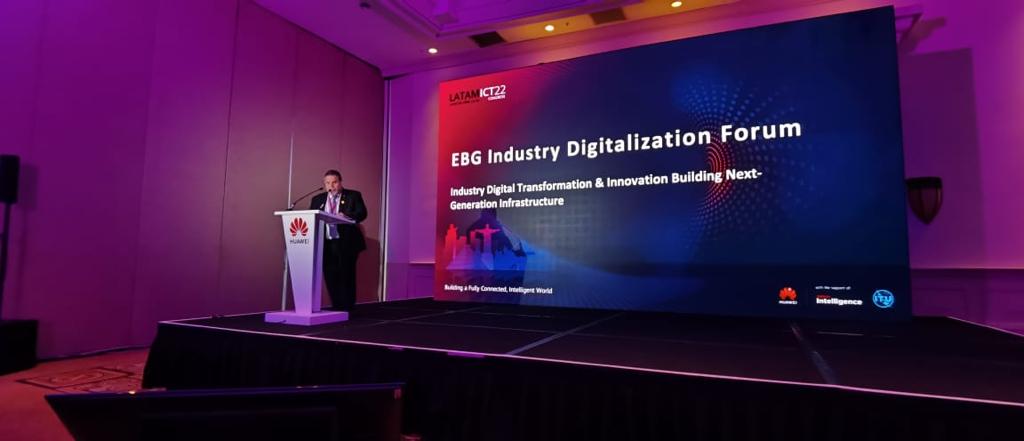
This session also included presentations on the progress of PIRESC V implementation, as well as the challenges and opportunities facing the university community in Central America and the Caribbean, by Mr. Francisco Alarcón. Mr. Juan Bosco Bernal, Rector of UDELAS, presented on the topic of “Higher Education and Governance,” sharing the university's experience in this area. Additionally, Mr. Roger Arias presented the University of El Salvador's progress in the digitalization of higher education, and Mr. Luis Adolfo Guillot, Government Solutions Manager for Latin America at Huawei, concluded with the University of El Salvador's smart campus project, part of its ongoing university digitalization efforts.

Among the various points on the agenda, Mr. Rector Francisco Herrera of the National Autonomous University of Honduras and Mr. Luis Sandoval, president of the Federation of University Students of Honduras, were given the opportunity to explain the student electoral process for electing the positions of the Executive Committee of the Federation of University Students of Honduras (FEUH), the Executive Committee of the Student Association of Faculty, University Center and Regional Center; the Executive Committee of the Career Student Association as well as the election of student representatives to the University Council of the UNAH, after 17 years.   

Before concluding, the floor was given to Rector Etelvina Medianero de Bonagas of the National Autonomous University of Chiriquí, who requested the solidarity and support of each member of the council, as the university has faced accusations and acts of vandalism that have harmed both her and the institution. Likewise, Rector Wilmer Reyes of the National University of Agriculture of Honduras expressed his concern regarding the proposed intervention in UNAG before the National Congress of Honduras. In both cases, it was agreed that the CSUCA would provide support through a statement.

For his part, Mr. Rector Eduardo Flores, of the University of Panama, has expressed his interest in extending an invitation to the University of Havana to join CSUCA. This request has the support of Mr. Rector Francisco Herrera of UNAH and Mr. Rector Enrique Torres Herrera of UDELAS.

Before the session ended, Ms. Ramona Rodríguez, Rector of UNAN-Managua, two months before handing over the presidency of CSUCA, thanked everyone for their support during her term and emphasized the importance of working in harmony.

Finally, it was agreed to hold the CXIX Ordinary Session of CSUCA at the University of Panama, on September 8 and 9.

UNAH students carry out student electoral process

Central America, April 7, 2022

After 17 years, the National Autonomous University of Honduras (UNAH) is holding an electoral process to fill the positions of the Executive Committee of the Federation of University Students of Honduras (FEUH), the Executive Committee of the Association of students of Faculty, university center and regional center; the Executive Committee of the Association of Career Students as well as the election of student representatives to the University Council.  

The electoral process was originally scheduled for April 2020. Due to the COVID-19 pandemic, the process was delayed, but it managed to incorporate new resources with the support of the National Autonomous University of Mexico (UNAM), who assisted in the implementation of an electronic voting system, which was enabled from 7:00 a.m. to 7:00 p.m. yesterday, in compliance with the Student Electoral Regulations (REE) of UNAH.

Áyax Irías, vice-rector of UNAH, expressed his enthusiasm for the due electoral process, indicating that it is a historic and transcendental event for the university and for Honduras.

This process was accompanied by Ricardo Reyes, president of the Federation of University Students of Central America and the Caribbean (FEUCA), Jorge Cortez, president of the Regional Council of Student Life (CONREVE) and Miguel Gutiérrez, deputy secretary for student affairs of CSUCA.

Following the election day, Luis Antonio Sandoval Sauceda, an economics student and candidate for the Gan National Student Alliance (GANE), was appointed president of the Federation of University Students of Honduras (FEUH). After his election, he proceeded to complete the accreditation process with FEUCA in order to participate in the CXVIII ordinary session of the Central American University Superior Council, to be held on April 8, 2022.

Image of UNAH University Presence.