CXVIII Ordinary Session of the Central American Higher University Council

City of San Salvador, April 08, 2022

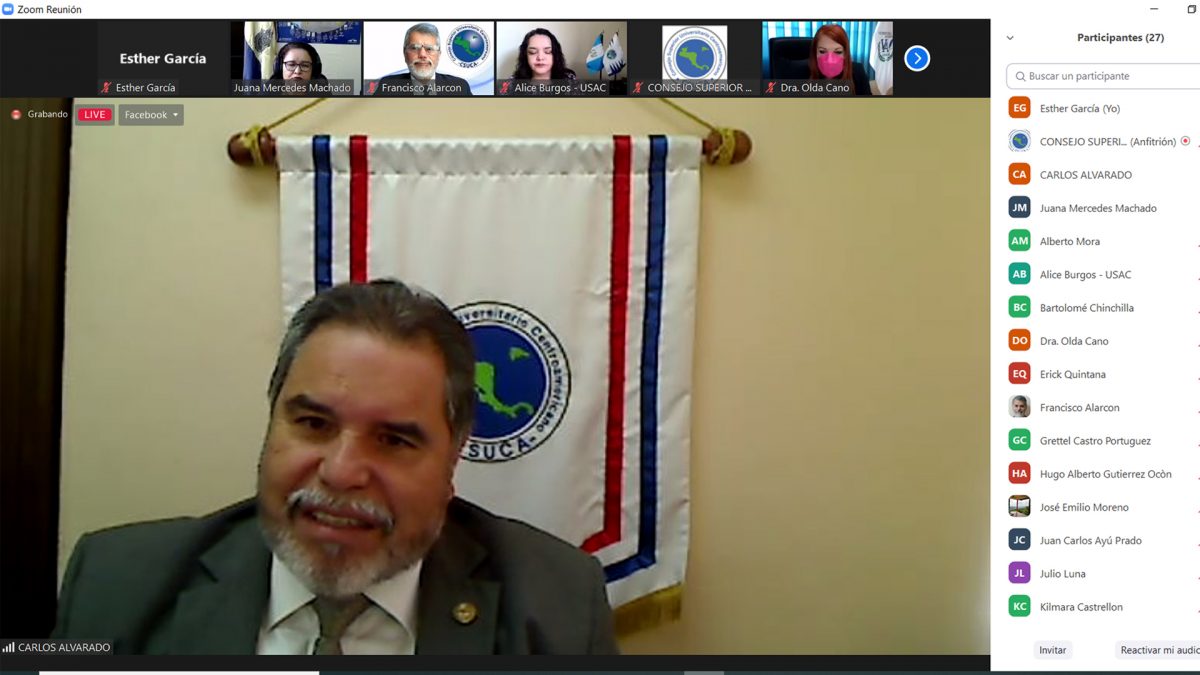
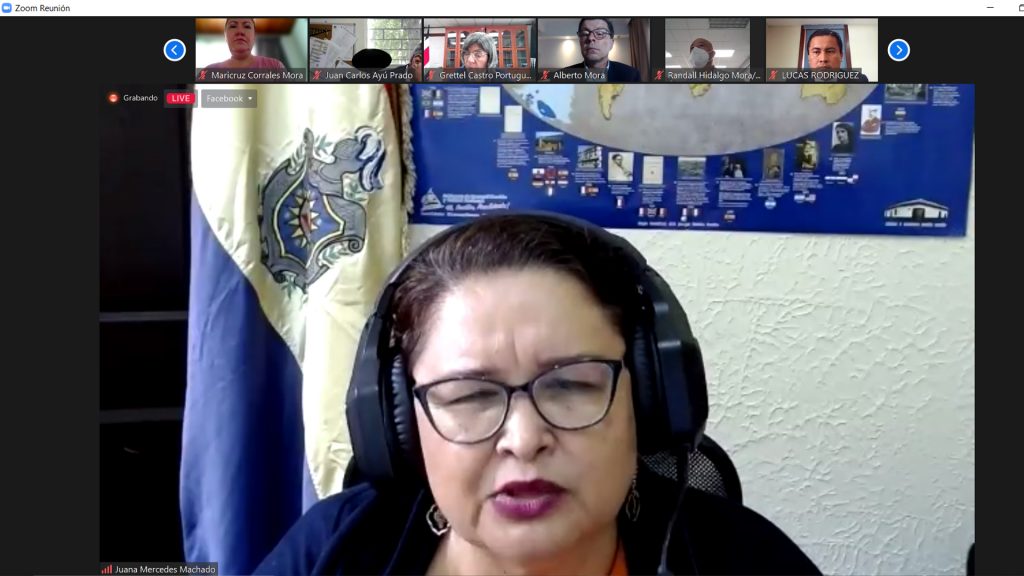
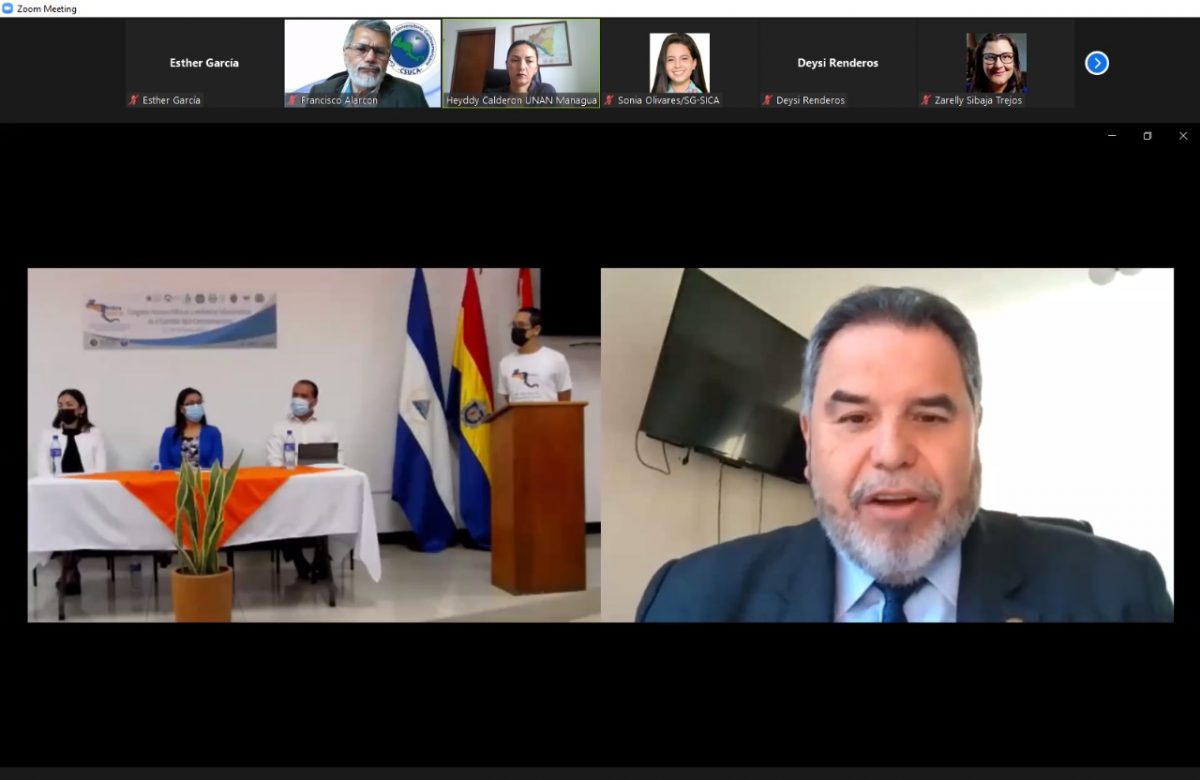
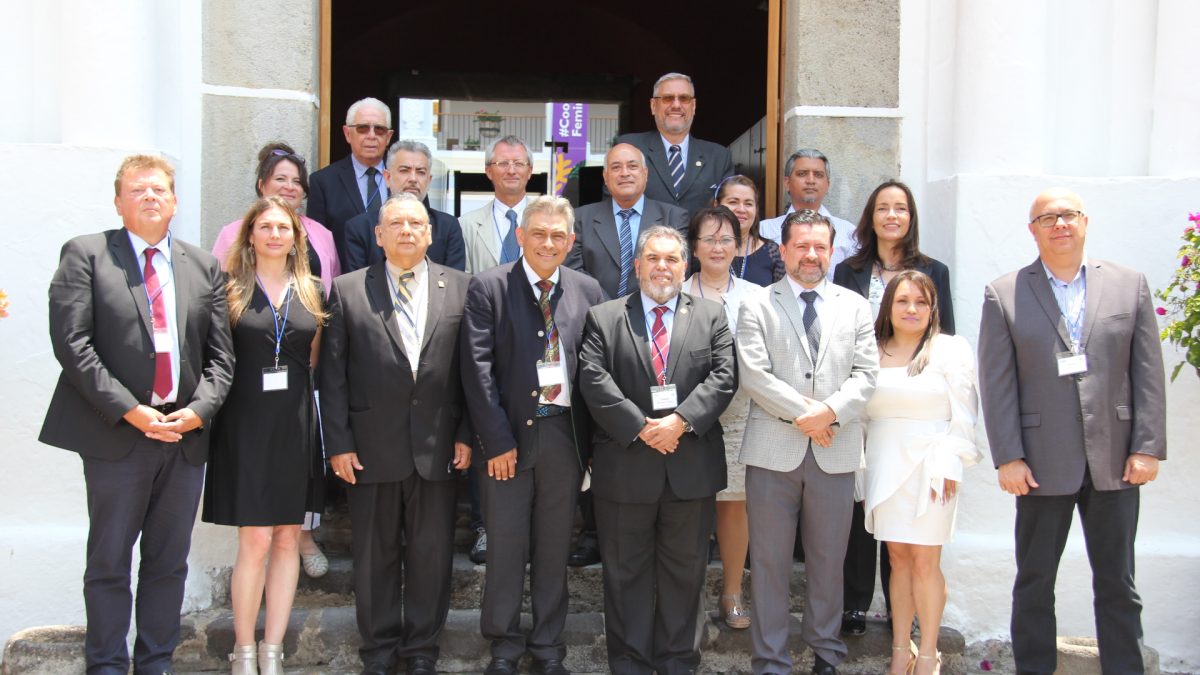
Today, the 118th Ordinary Session of the Central American Higher University Council (CSUCA) was held in a hybrid format, hosted by the University of El Salvador. It was presided over by the 24 rectors of CSUCA member universities and 19 presidents of the Student Federations, representing CSUCA member universities.

The session began with welcoming remarks from Mr. Rector Roger Arias of the University of El Salvador, who welcomed everyone to the institution and commemorated the 181st anniversary of the UES, which has experienced various adversities, but despite this, continues to strive for Salvadoran society through the university-society-state partnership.

Likewise, Rector Ramona Rodríguez of the National Autonomous University of Nicaragua, Managua, and president of CSUCA, warmly welcomed the council members to the session, emphasizing the importance of the meeting and the opportunities that connectivity provides for holding the event in a hybrid format. Following this, reports were presented from the CSUCA presidency, the CSUCA General Secretariat, and FEUCA.

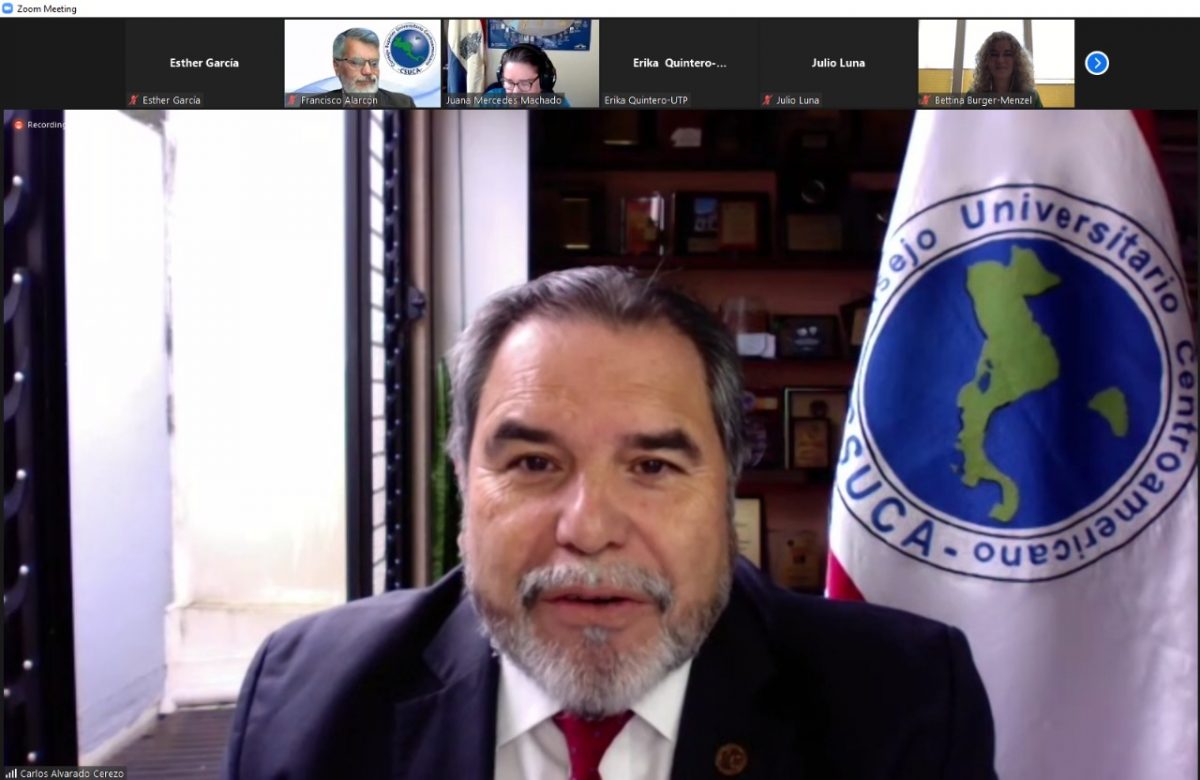
It should be noted that in the CXVIII session, the election for the position of general secretary of the CSUCA, period July 2022-June 2026, was carried out, through the election process, with 38 votes in favor, Mr. Carlos Guillermo Alvarado Cerezo has been re-elected, to continue with the work carried out during the period July 2018-June 2022. 

With one person absent, 3 abstentions, 2 votes in favor of Mr. Diego José Montenegro López and 38 votes in favor of Mr. Carlos Alvarado, the 44 votes of the Central American University Superior Council were completed, corresponding to the election of such an important position.

“I want to thank the members of the council; we are a family, and we must work together in solidarity and collaboration to meet the challenges that education faces in our region. For me, the trust you have placed in me is a challenge and a privilege. We will work hard and we will not betray that trust,” said Mr. Carlos Alvarado.

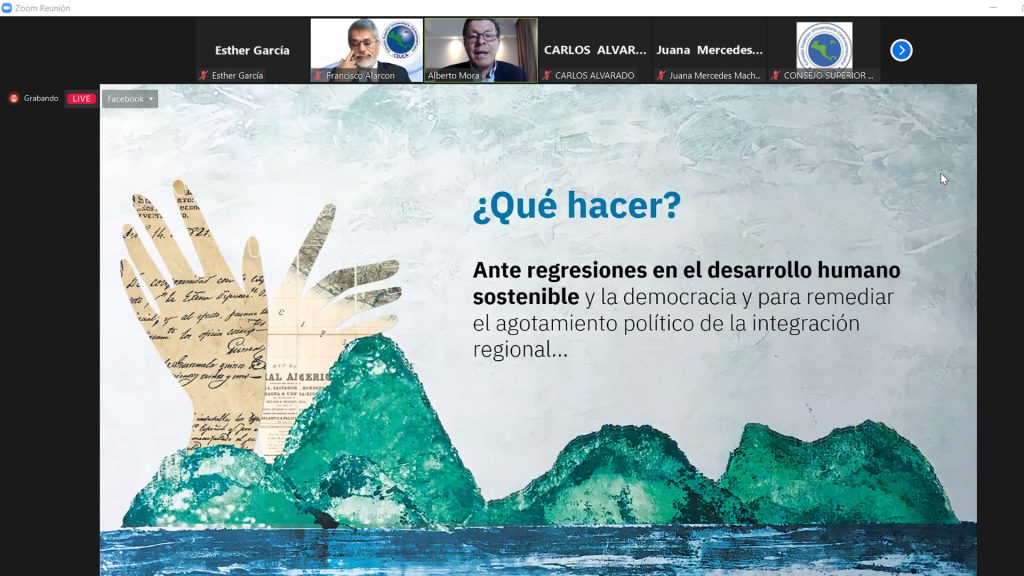
This session also included presentations on the progress of PIRESC V implementation, as well as the challenges and opportunities facing the university community in Central America and the Caribbean, by Mr. Francisco Alarcón. Mr. Juan Bosco Bernal, Rector of UDELAS, presented on the topic of “Higher Education and Governance,” sharing the university's experience in this area. Additionally, Mr. Roger Arias presented the University of El Salvador's progress in the digitalization of higher education, and Mr. Luis Adolfo Guillot, Government Solutions Manager for Latin America at Huawei, concluded with the University of El Salvador's smart campus project, part of its ongoing university digitalization efforts.

Among the various points on the agenda, Mr. Rector Francisco Herrera of the National Autonomous University of Honduras and Mr. Luis Sandoval, president of the Federation of University Students of Honduras, were given the opportunity to explain the student electoral process for electing the positions of the Executive Committee of the Federation of University Students of Honduras (FEUH), the Executive Committee of the Student Association of Faculty, University Center and Regional Center; the Executive Committee of the Career Student Association as well as the election of student representatives to the University Council of the UNAH, after 17 years.   

Before concluding, the floor was given to Rector Etelvina Medianero de Bonagas of the National Autonomous University of Chiriquí, who requested the solidarity and support of each member of the council, as the university has faced accusations and acts of vandalism that have harmed both her and the institution. Likewise, Rector Wilmer Reyes of the National University of Agriculture of Honduras expressed his concern regarding the proposed intervention in UNAG before the National Congress of Honduras. In both cases, it was agreed that the CSUCA would provide support through a statement.

For his part, Mr. Rector Eduardo Flores, of the University of Panama, has expressed his interest in extending an invitation to the University of Havana to join CSUCA. This request has the support of Mr. Rector Francisco Herrera of UNAH and Mr. Rector Enrique Torres Herrera of UDELAS.

Before the session ended, Ms. Ramona Rodríguez, Rector of UNAN-Managua, two months before handing over the presidency of CSUCA, thanked everyone for their support during her term and emphasized the importance of working in harmony.

Finally, it was agreed to hold the CXIX Ordinary Session of CSUCA at the University of Panama, on September 8 and 9.

UNAH students carry out student electoral process

Central America, April 7, 2022

After 17 years, the National Autonomous University of Honduras (UNAH) is holding an electoral process to fill the positions of the Executive Committee of the Federation of University Students of Honduras (FEUH), the Executive Committee of the Association of students of Faculty, university center and regional center; the Executive Committee of the Association of Career Students as well as the election of student representatives to the University Council.  

The electoral process was originally scheduled for April 2020. Due to the COVID-19 pandemic, the process was delayed, but it managed to incorporate new resources with the support of the National Autonomous University of Mexico (UNAM), who assisted in the implementation of an electronic voting system, which was enabled from 7:00 a.m. to 7:00 p.m. yesterday, in compliance with the Student Electoral Regulations (REE) of UNAH.

Áyax Irías, vice-rector of UNAH, expressed his enthusiasm for the due electoral process, indicating that it is a historic and transcendental event for the university and for Honduras.

This process was accompanied by Ricardo Reyes, president of the Federation of University Students of Central America and the Caribbean (FEUCA), Jorge Cortez, president of the Regional Council of Student Life (CONREVE) and Miguel Gutiérrez, deputy secretary for student affairs of CSUCA.

Following the election day, Luis Antonio Sandoval Sauceda, an economics student and candidate for the Gan National Student Alliance (GANE), was appointed president of the Federation of University Students of Honduras (FEUH). After his election, he proceeded to complete the accreditation process with FEUCA in order to participate in the CXVIII ordinary session of the Central American University Superior Council, to be held on April 8, 2022.

Image of UNAH University Presence.

Open Science Network

Central America, March 30, 2022

With the purpose of working collaboratively to strengthen open science from the 24 public universities that are part of CSUCA, the Central American and Caribbean Open Science Network is formed.

As part of the actions to be carried out in the Fifth Plan for the Integration of Higher Education in Central America and the Dominican Republic -PIRESC V-, the Open Science Network of Central America and the Caribbean has been formed, with the purpose of strengthening the capacities of universities through a movement that promotes the opening of scientific research with topics of interest in open science, citizen science, politics, technology, etc. 

Among the objectives that this network aims to promote is the search for training in topics such as "Trainer of Trainers in Open Science" with the purpose of training the network and thus enabling its members to become trainers of the regional university community.

Given that LA Referencia gives visibility to the scientific production of higher education institutions, an approach has been made with the purpose of generating training related to the subject and at the same time getting the countries of the SICA region through their universities to integrate to become part of LA Referencia.

This is the initial initiative of the network, fulfilling the impetus of the principles, concepts and strategies of open science in Central America and the Dominican Republic. Depending on the progress made during 2022, a short, medium and long-term plan for the Open Science Network will be created.

DOCINADE Cohort 2023

Call for applications for the Doctorate in Natural Sciences for Development (DOCINADE), Inter-university Doctoral Program of the Mesoamerican region, under the bimodal pedagogical model, which combines academic activities both face-to-face and at a distance and virtual, reaccredited before the Central American Postgraduate Agency (ACAP).

The call for admission to the program is open to all professionals in the scientific and technological fields, with a related Academic Master's degree and academic experience in research.

Among these areas of knowledge, the following are recognized: Agronomy and Agriculture, Animal Science and Veterinary Medicine, Biology, Forestry, Environmental Sciences, Chemistry, Physics, Pharmacy and Medicine, Electronics, Computing, Engineering and other areas related to science and technology.

Know the basics:

https://drive.google.com/drive/folders/1dTgH6UQ5RjjMprXYN0BM4VABOgbLUSc_?usp=sharing


Curriculum Internationalization Focus Group

Europe and Central America, March 29, 2021

With the purpose of generating ideas and information on the institutional needs in the universities of the CSUCA for the development of skills and competencies in IdC, the first focus group session is held with university officials belonging to three regional systems of the Central American University Confederation, SIESCA, SIRCIP and SICEVAES.

Given that internationalization efforts have been profoundly affected by the pandemic caused by the SARS-CoV-2 virus, OBREAL Global and CSUCA are joining forces to coordinate institutional strengthening initiatives, with the aim of consolidating curriculum internationalization (CI) actions.

The collaborative work has been defined in three stages, the first being a participatory analysis of the current state and future prospects of Research and Innovation (RI) processes within the academic offerings of universities in Central America and the Dominican Republic, conducted through focus groups. For this reason, the first focus group session was held today with the participation of university officials from the University of San Carlos of Guatemala (USAC), the National Autonomous University of Honduras (UNAH), the Francisco Morazán National Pedagogical University (UPNFM), the National Agrarian University (UNA), the National Autonomous University of Nicaragua-Managua (UNAN-Managua), and the University of the Autonomous Regions of the Nicaraguan Caribbean Coast (URACCAN). and University of Costa Rica -UCR-.

Among the good practices that have been developed by universities in the SICA region are the Qualifications Framework for Central American Higher Education -MCESCA, the Tuning Latin America Project, and the indicators proposed through the Fifth Plan for the Regional Integration of Higher Education in Central America and the Dominican Republic -PIRESC V-, proposals that have marked and support the deepening of the internationalization of higher education through curricular proposals.

Dr. Julio Theiler de Obreal placed special emphasis on the use of new communication technologies, seen as an opportunity to promote the internationalization of the curriculum through different virtual actions.

Dr. Bartolomé Chinchilla from UPNFM mentioned the work being done at the university through curriculum redesign in all programs, incorporating internationalization as a cross-cutting process within the undergraduate and postgraduate curriculum.

Dr. Belinda Flores from UNAH mentioned the curriculum's focus on sustainable human development, considered from the Millennium Development Goals and adapted to the SDGs. She also highlighted the active student exchange through Erasmus programs.

For her part, Dr. Letisia Castillo of URACCAN indicated that the university has a strategic role, a fundamental part of its teaching and outreach functions; internationalization is a cross-cutting theme in all its other functions, and this strategic planning translates into ongoing university actions, based on the intercultural environment within the university itself. She also noted that one of its main exchange agreements is with Norway.  

Regarding the UCR, Dr. Adrián Vergara spoke about the interest that exists from the teaching area to promote internationalization, while also mentioning the processes that the university has through student mobility and summer schools, being concrete experiences.

The National University of Nicaragua (UNA), through Dr. Óscar Gómez, stated that within the university there is an interdependence of human talent, which necessitates seeking international cooperation. Efforts are focused on fostering internationalization, and currently, work is underway to design a collaborative project within the animal science program. He added that language proficiency is another fundamental tool for developing internationalization initiatives.

For her part, Dr. Alice Burgos from USAC expressed the importance of the USAC 2020-2030 plan, within which the concept of curricular internationalization is incorporated into the university's own management, while also presenting examples through the Faculty of Medicine and the Faculty of Humanities.

Following this session, it is estimated that another focus group will be held on April 29th, after which a series of webinars on best practice cases in Latin America and Europe will be presented, with experiences in curriculum internationalization, and finally, training activities in COIL (Collaborative International Online Learning).