
Following the various actions of the Presidency of the Central American Higher University Council, the University of El Salvador (UES) assumed the presidency of two systems that make up the CSUCA, as part of the institutional change that gives continuity to the joint work of the public universities of Central America and the Caribbean, in matters of evaluation and harmonization of higher education, research and postgraduate studies.
The transfers correspond to the Central American System for Evaluation and Harmonization of Higher Education (SICEVAES) and the Central American and Caribbean Regional System for Research and Postgraduate Studies (SIRCIP), whose presidencies were held by representatives of the University of San Carlos of Guatemala (USAC).
In both events, the Secretary General of CSUCA, MSc. Carlos Alvarado Cerezo, reaffirmed the General Secretariat's commitment to supporting the new presidencies and continuing to strengthen the collaborative work of the region's universities. He emphasized the importance of maintaining the systems' agendas as spaces for cooperation and regional integration, aimed at strengthening the quality of higher education, research, human talent development, and generating responses to the challenges facing Central America and the Caribbean.
SICEVAES: continuity of the regional commitment to the quality of public higher education
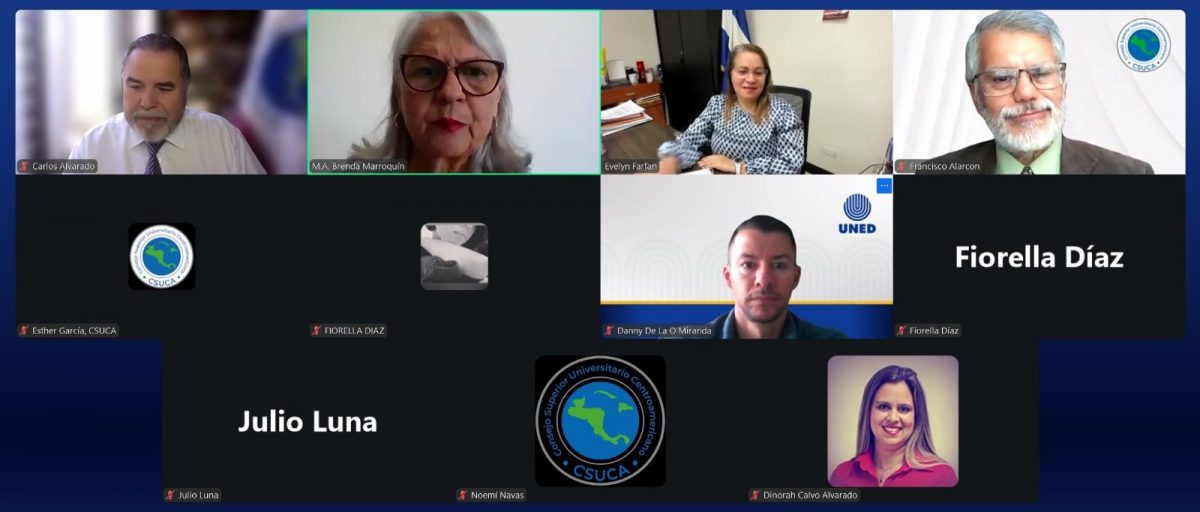
MA Brenda Marroquín, Director of Teaching at USAC, handed over the Presidency of SICEVAES to Dr. Evelyn Farfán, Academic Vice-Rector of UES, who will be in charge of the system during the period July 2026–June 2027.
At the conclusion of her term, MA Brenda Marroquín highlighted the progress achieved in academic harmonization, quality assurance, and regional academic integration, and reaffirmed that the quality of higher education constitutes an ethical, social, and regional commitment. In this regard, she called for continued strengthening of cooperation, the exchange of experiences, and the building of agreements, emphasizing that quality must be consolidated as an institutional culture based on continuous improvement, innovation, transparency, and social commitment.
For her part, Dr. Evelyn Farfán thanked the previous administration for its work and expressed her commitment to continue promoting joint actions to achieve the objectives of SICEVAES.
Among the processes that the new Presidency will oversee is the preparation of the 10th Central American University Congress, to be held from October 19 to 22, 2027, in Tegucigalpa, Honduras. SICEVAES will play a significant role in this process, which will allow for the evaluation of progress on the Fifth Plan for the Integration of Higher Education in Central America and the Dominican Republic (PIRESC V) and the development of proposals to address the current transformations and challenges in higher education.
SIRCIP: an active system with a regional agenda underway
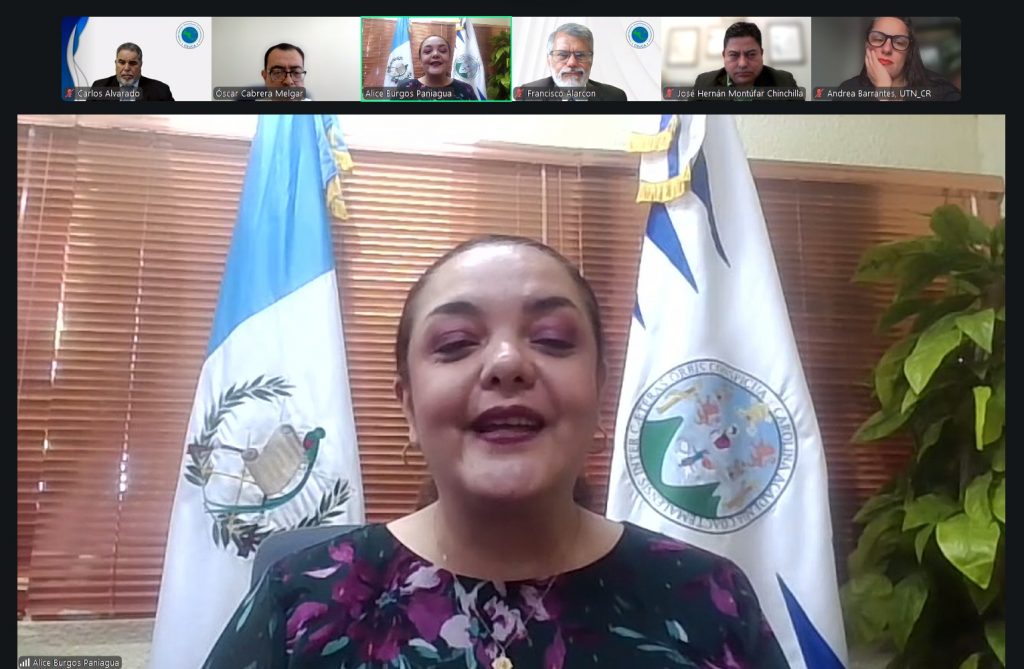
Dr. Alice Burgos Paniagua, from USAC, handed over the Presidency of SIRCIP to Dr. Óscar Ovidio Cabrera Melgar, Postgraduate Secretary of UES, who assumed leadership of the system for a period of one year.
Upon handing over the Presidency, Dr. Alice Burgos highlighted that the new administration is receiving an active system, with a defined regional agenda, important agreements underway, and a university community willing to continue working collectively.
Among the advances achieved during his administration, he highlighted the Regional Research and Postgraduate Agenda; the CRIS-CSUCA Regional Strategy for university scientific management; the strengthening of regional postgraduate programs; the development of the Regional Observatory of Scientific Research and Postgraduate Programs; as well as the work on the ethical and responsible use of artificial intelligence in research.
Dr. Alice Burgos highlighted that these advances are the result of the collective and coordinated work of the universities, which allows the region to expand its capacity to research, train, innovate and transform.
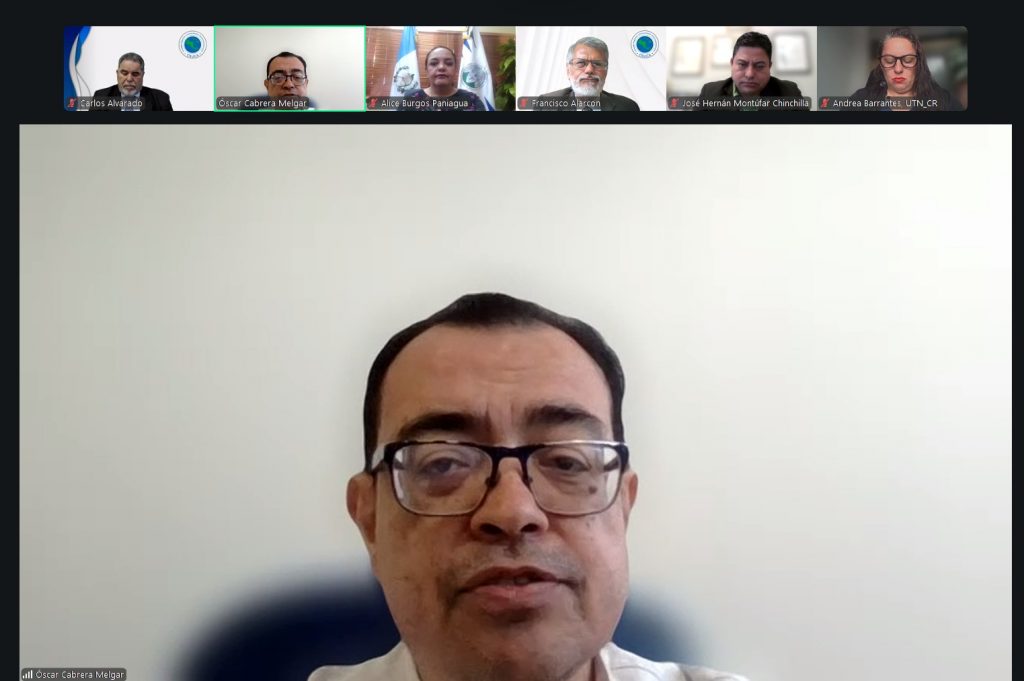
Upon assuming the Presidency, Dr. Óscar Cabrera reaffirmed the UES's commitment to research, science, and postgraduate studies as pillars for addressing the region's needs. For this new phase, he outlined three priorities: strengthening regional research focused on challenges such as climate change, food security, public health, governance, and social equity; enhancing postgraduate programs and advanced training; and strengthening internationalization and cooperation with international research networks.
The transition continues in the CSUCA systems
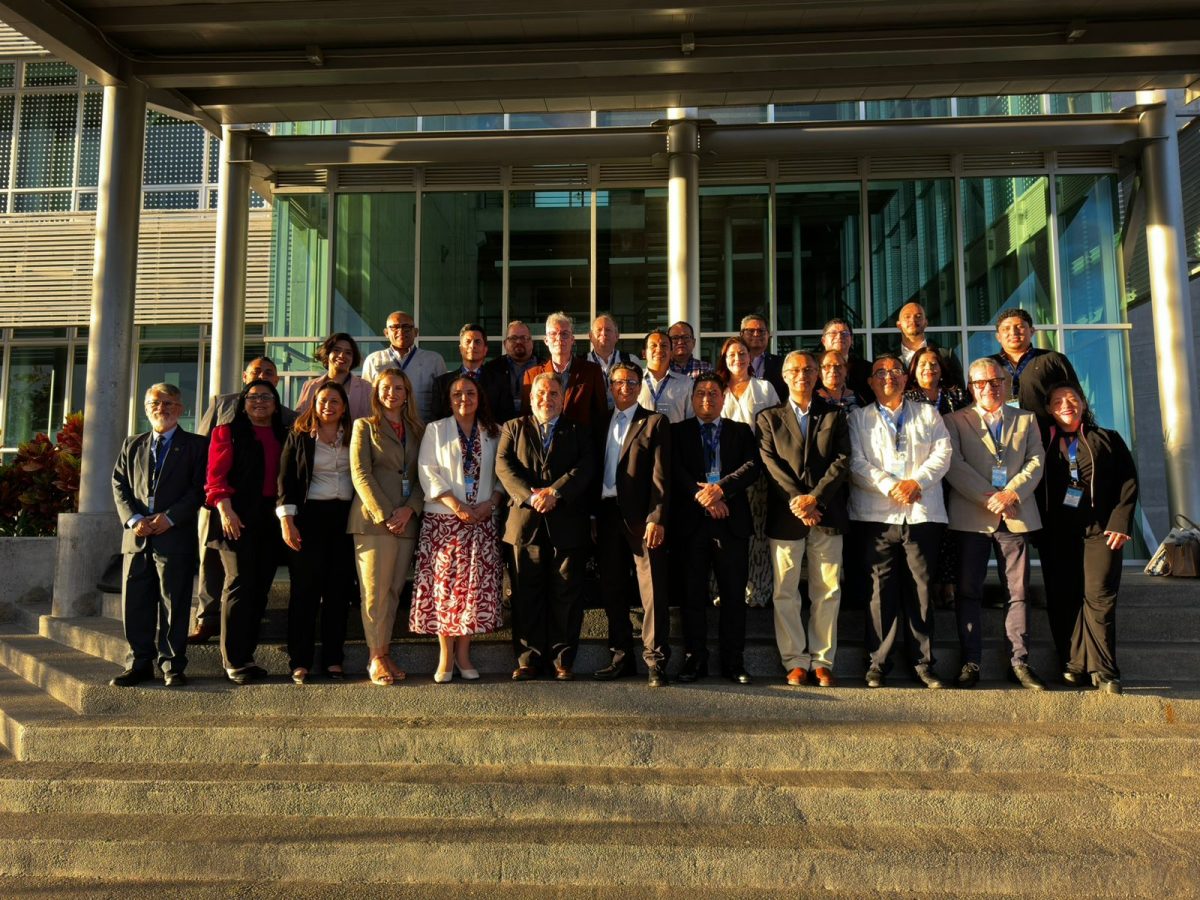
The transfers of the presidencies of SICEVAES and SIRCIP are part of the institutional succession process derived from the CSUCA Presidency, which is currently held by the University of El Salvador, under the leadership of its Rector, M.Sc. Juan Rosa Quintanilla.
As part of this process, the transfer of the presidencies of the Central American Higher Education Internationalization System (SIESCA) and the Regional University Information and Communication System (SIREICU) is still pending. In the case of the latter, the transfer will take place during the XIII SIREICU General Assembly.
These changes allow for continuity in the work agendas of the systems and strengthen the articulation of member universities around the priorities of higher education in Central America and the Caribbean.
 English
  Español de Guatemala